
Explore the Human 3D Brain Model
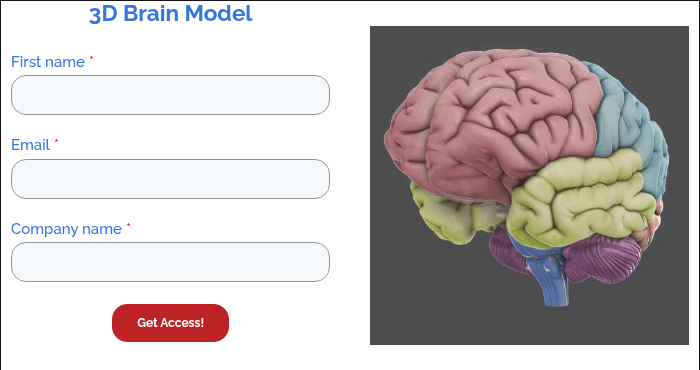
The brain defines how we think, feel, and experience the world. This free interactive tool offers a highly detailed 3D brain model, featuring 29 unique regions complete with simple explanations and real-world case studies.
Whether you are a student or a hobbyist looking for a 3D model of brain to study, this tool provides an immersive experience into the brain’s layout, functions, and how damage can affect behavior.

Why Use a Virtual 3D Brain Model?
In modern medical education, a static image isn't enough. Using a 3D brain model allows you to rotate, zoom, and click through layers of neuroanatomy. This interactive 3D model of brain systems helps in:
- Visualising the spatial relationship between the frontal lobe and the brain stem.
- Understanding complex pathways for EMS and nursing students.
- Simplifying neuroscience for educators.
What Will You Get?
- A fully rotatable display with 29 clickable structures.
- Detailed explanations of each region’s functions and associated disorders.
- Learn about famous cases like Phineas Gage through the lens of a 3D model brain.
- Direct links to scientific research and reviews.
Who Is This For?
- EMS students learning how brain injuries affect cognition and behavior.
- Use this 3D brain model alongside a patient vitals monitor to create high-fidelity neurological scenarios for your students.
- Anyone curious about the relationship between brain structures and cognitive disorders like ADHD, Alzheimer’s, autism, depression, and schizophrenia.
Why Is It Free?
This tool was developed by the DNA Learning Center to make neuroscience education accessible. It’s part of an effort to bring advanced research and anatomy tools to students, teachers, and healthcare professionals at no cost.
How to Make 3D Brain Model
While virtual tools are great, many students ask how to make 3d brain model projects for science fairs or classroom displays. Here are three quick ways:
- Clay Modeling: Use different colors of clay to represent the lobes seen in our virtual 3d model brain.
- 3D Printing: Download STL files to print a physical 3d model of brain anatomy.
- Paper Mache: A classic method to visualize the gyri and sulci of the cerebral cortex.
Frequently Asked Questions
Q: Is this 3D brain model free to use?
Yes, this interactive 3D model brain was developed by the DNA Learning Center to make neuroscience education accessible to everyone at no cost.
Q: Can I use this 3D model of brain structures for anatomy labs?
Yes, it is a perfect digital supplement for students who are learning how to make 3d brain model diagrams or preparing for neuroanatomy exams.
Q: What structures are included in the 3d brain model?
It covers 29 key areas, including the prefrontal cortex, amygdala, hippocampus, and cerebellum, providing a complete 3d model brain experience.

