
Starting EMS school is challenging but rewarding. You need more than classroom learning. You must practice procedures, learn equipment, and prepare for real emergencies.
Why the Right EMS Training Equipment Matters
The right equipment helps you practice skills and build confidence. You'll work better during simulations and clinicals. You'll be ready when you work with real patients.
This guide lists the 9 essential tools for your EMS training kit. You'll learn what each tool does and why you need it.
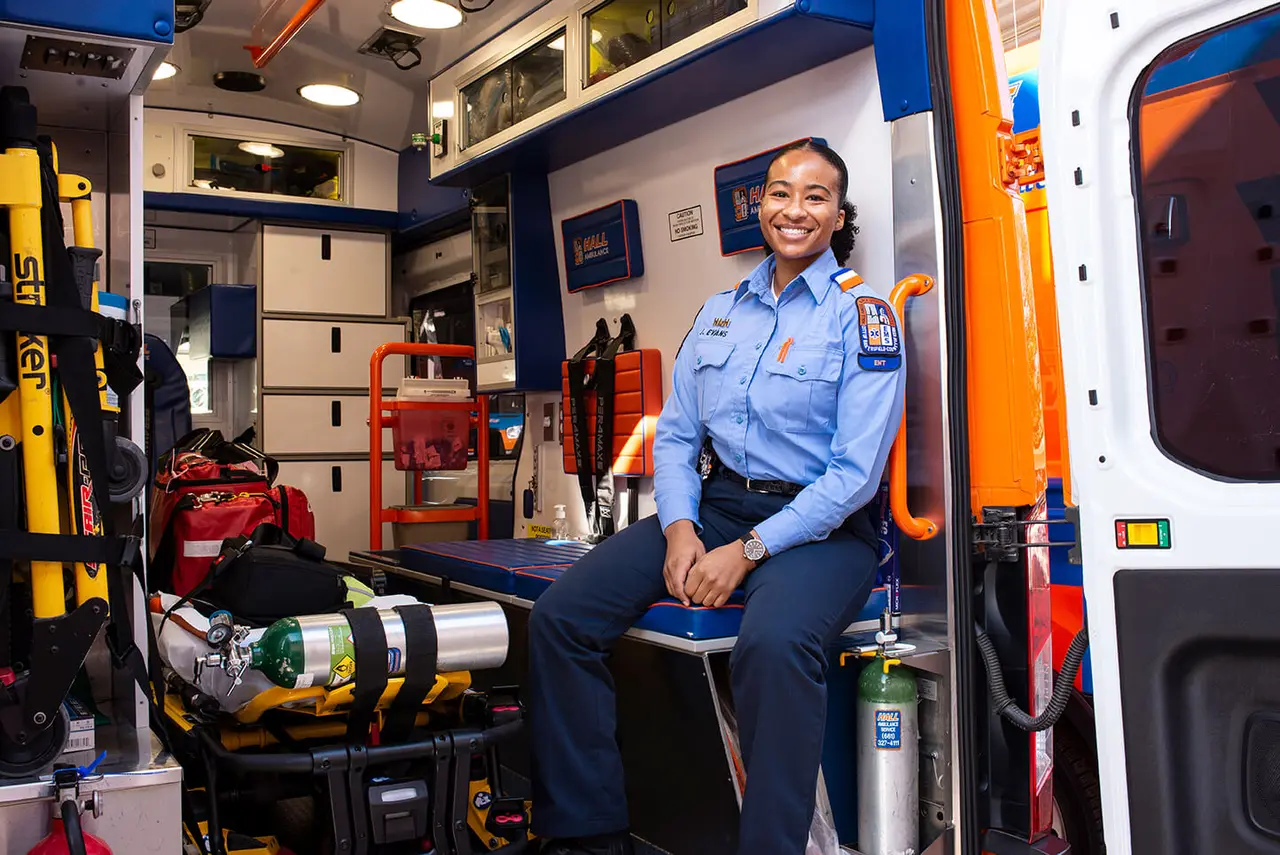
Image source: Hallam College. (n.d.). Kinesiology student moves to becoming an EMT. Image courtesy of Hallam College.
1. Stethoscope: Listen to Heart and Lung Sounds
A stethoscope lets you hear a patient's heart and lungs. This is critical for spotting problems. Your stethoscope helps you:
- Listen for normal and abnormal heart rhythms
- Detect breathing problems
- Make better patient assessments
2. Blood Pressure Cuff: Check Patient Health
Taking blood pressure is a key EMS skill. You need to know if a patient's pressure is too high or too low.
Start with a manual cuff. Then learn a digital cuff. Both are used in the field.
What to practice:
- How to place the cuff correctly
- How to read the numbers
- When to take readings quickly in emergencies
3. Pen Light: Check Eyes and Wounds
A pen light medical lets you shine bright light on a patient's eyes and wounds.
Why you need it:
- Check if pupils (the black part of the eye) respond to light
- Look for signs of infection in wounds
- Spot bleeding or other problems in dark areas
A bright, focused light helps you see details. You'll use this in almost every emergency call.
4. Trauma Shears: Cut Through Clothing Fast
Trauma shears help you remove clothing and gear quickly from injured patients.
Why you need them:
- Cut through tough clothing in seconds
- Cut seat belts and straps
- Reach injuries without wasting time
Practice using them safely. Get comfortable cutting different materials during training so you can do it quickly in real emergencies.
5. CPR Mask: Protect During Mouth-to-Mouth
A CPR mask is a barrier between you and the patient during CPR. It protects both of you.
What it does:
- Covers the patient's mouth and nose
- Lets you deliver rescue breaths safely
- Prevents disease spread
Practice with a CPR mask on a manikin. Get comfortable with the technique. You need to work fast and smoothly when you do real CPR.
6. EMT Pouch: Stay Organized
An organized pouch helps you find tools fast during emergencies.
What to do:
- Get a pouch with multiple compartments
- Keep similar items together (scissors with shears, all bandages together, etc.)
- Practice finding each tool without looking
A well-organized pouch means:
- Faster response times
- Less fumbling in stressful moments
- Better patient care
Practice organising your pouch. Reorganise it when you add new tools.
7. Notebook: Write Down Patient Information
Writing down patient information during training is important. You'll review these notes later to improve.
What to write:
- Patient's chief complaint (why they called)
- Vital signs (pulse, breathing, blood pressure)
- What treatments you gave
- How the patient responded
Why this matters:
- You learn from every call
- You remember details better when you write them
- You practice being thorough
- You spot patterns in emergencies
Use a waterproof notepad so notes survive spills and weather.
8. Digital Thermometer: Check Body Temperature
A thermometer tells you if a patient has a fever (too hot) or hypothermia (too cold).
How to use it:
- Oral: Under the tongue (most common)
- Axillary: Under the armpit
- Tympanic: In the ear
Why it matters:
- A fever can mean infection
- Hypothermia is a medical emergency
- Temperature helps you decide treatment
Practice taking temperatures on classmates. You'll get faster and more accurate with practice.
9. Pocket Guide: Reference During Calls
A pocket guide fits in your uniform pocket. It gives you quick answers during emergencies.
Choose based on your training level:
- EMS field guide ALS version (Advanced Life Support) - for paramedic students
- EMS field guide BLS version (Basic Life Support) - for EMT-Basic students
What's in a good pocket guide:
Emergency protocols (what to do for different emergencies)
- Medication doses
- Medical terminology
- Treatment steps
Why use one:
You can't remember everything in stressful moments
- It helps you work faster
- It reduces mistakes
- It backs up your training
Keep your pocket guide with you during clinicals and practice calls. Use it to look up information you're unsure about.
Ready to Build Your EMS Kit?
You now know the 9 essential tools every EMS student needs. Having these tools helps you:
- Practice the right way
- Build confidence
- Prepare for real emergencies
Start with the basics: stethoscope, pen light, and notepad. Add more tools as your training progresses.
Visit MedTechKits.com to find individual tools or ready-made kits that match your training level and budget.